Day visitors are invited to explore at their own pace. Follow the trails, find a quiet place by the water, take a swim, watch for loons, or simply sit somewhere without accomplishing anything measurable. That last activity is more productive than it sounds.
Resetting Humans, One Island at a Time
1 Big Sustainable Island is a nonprofit organization with a simple mission: Resetting Humans, one island at a time. We believe time outdoors can restore curiosity, perspective, and connection, especially when that outdoor experience happens to be surrounded by water.
Your visit also helps support the care of the island, its trails, docks, facilities, wildlife habitat, educational programs, and unusual experiments in sustainable island living. By being here, you are participating in something larger than a day at the lake.
Everyone is welcome. No gate to unlock. Just arrive respectfully and enjoy.
What Sunrise-Sunset Access Means
During daylight hours, visitors are welcome to:Walk the island trails, sit by the water,enjoy the views, docks, and shoreline, swim, paddle, or picnic quietly in shared spaces, watch wildlife from a respectful distance. Bring dogs on leash at all times.
It's a place to slow down, look around, and reset - even if just for an hour. Occasionally parts of the island are posted for private events. Look for signs for guidance.
Respect Overnight Guests
Several areas of the island serve as temporary homes for overnight guests. Please respect their privacy by avoiding decks, docks, buildings, furnishings, and spaces associated with reserved accommodations.
A useful rule is that if something looks like someone's bedroom, porch, kitchen, or private dock, it probably is. Admire the island's creative accommodations from a respectful distance unless invited closer.
Leave No Trace
Take all personal belongings, food packaging, and trash with you or place them in the proper receptacles. Do not remove plants, rocks, wood, wildlife, signs, equipment, or other island materials.
Leave No Trace also means minimizing damage to trails, shoreline vegetation, and natural areas. The goal is for the island to look as though you visited, enjoyed yourself immensely, and then vanished with remarkable tidiness.
Quiet Areas
Some parts of the island are intended for quiet recreation, wildlife observation, reflection, or the privacy of overnight guests. Please keep voices, music, and group activities at a considerate volume, particularly near lodging areas.
Sound travels surprisingly well across water and through the woods. What feels like a private conversation at your picnic table may become today's entertainment for someone enjoying a peaceful hammock across the island.
Safety Expectations
Every visitor shares responsibility for making the island a safe place to explore. Make good decisions based on weather, water conditions, your physical abilities, your equipment, and posted guidance. Children must be supervised, required life jackets must be worn, and closed or restricted areas must be respected.
In an emergency, call 911 immediately. For non-emergency assistance, directions, or questions, use the Get Help Now button below or contact a member of the 1BSI team.
We're dog people, but not every visitor or resident dog is looking to make a new best friend. Ask before allowing dogs to greet one another, and please keep pets away from private accommodations, food areas, and sensitive shoreline habitat.
Your vehicle will remain on the mainland while you’re visiting the island, so before boarding, make sure you’ve grabbed everything you’ll want for the day. Discovering that your sunglasses, swimsuit, or carefully selected bag of snacks is still sitting in the car becomes considerably more interesting once there’s a lake between you and it. From there, hop aboard the ferry and we’ll take care of the watery part of your commute.
April through November, our regular ferry schedule is designed to make getting to and from the island simple. Arrival ferries depart from the mainland at 9:45 AM, 3:00 PM, and 5:00 PM. Departure ferries leave the island at 10:00 AM, 3:30 PM, and 5:30 PM. The ride across Annabessacook Lake only takes about 10 minutes, but it’s a pleasant way to begin and end your island adventure. Purchase tickets here:
https://1bsi.org/DayFerry.php. Your emailed receipt is your ticket.
Ferry Process
Please arrive at the dock a few minutes before your scheduled departure so we can keep the ferry running on time. When you’re ready to head home, simply catch the departure ferry you’ve planned for.
If your schedule changes, just let us know through the Get Help Now button in the Digital Visitor Guide or by speaking with a crew member. We don’t mind changing plans, but we do like knowing exactly who’s on the island and who’s safely back on shore. It’s one of those tiny details that keeps island life running surprisingly smoothly.
Can I Paddle Home?
Sure! You can rent a boat by finding one at the boat rack near the Maine Entrance Dock on the North end of the island , scan the QRCode, and paddle it back to shore. Boat rental details can be found here:
https://1bsi.org/boating.php
1 Big Sustainable Island has two primary visitor docks. The Maine Entrance Dock is located on the north end of the island and serves as the main arrival point for the public ferry. Most visitors arriving by ferry will begin their island adventure here.
The Public Entrance Dock is located on the south end of the island near Loon Point. Visitors arriving by canoe, kayak, SUP, pedal boat, or private boat are welcome to use this dock, which provides convenient access to the island's southern trails and shoreline. Both entrances connect to the island's trail system, so whichever dock you arrive at, the rest of the island is only a short walk away.
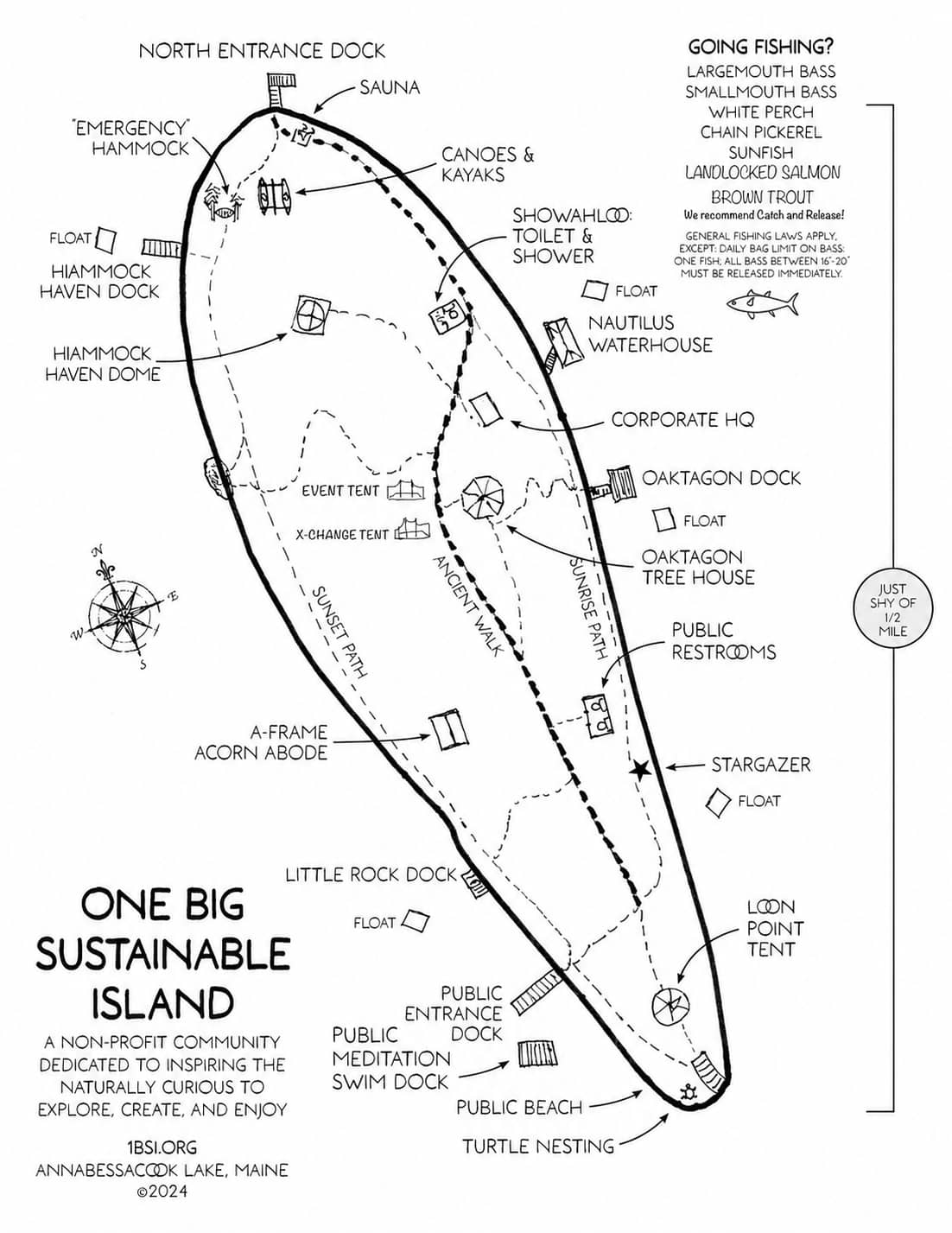 The island map shows the walking trails, docks, swimming areas, restrooms, gathering places, equipment locations, overnight stays, and other useful landmarks. Look for posted maps near the primary arrival areas or open the digital version here.
Over a mile of trails curve through woods, shoreline, and small clearings. This map will help you find what you are looking for and, occasionally, something you were not.
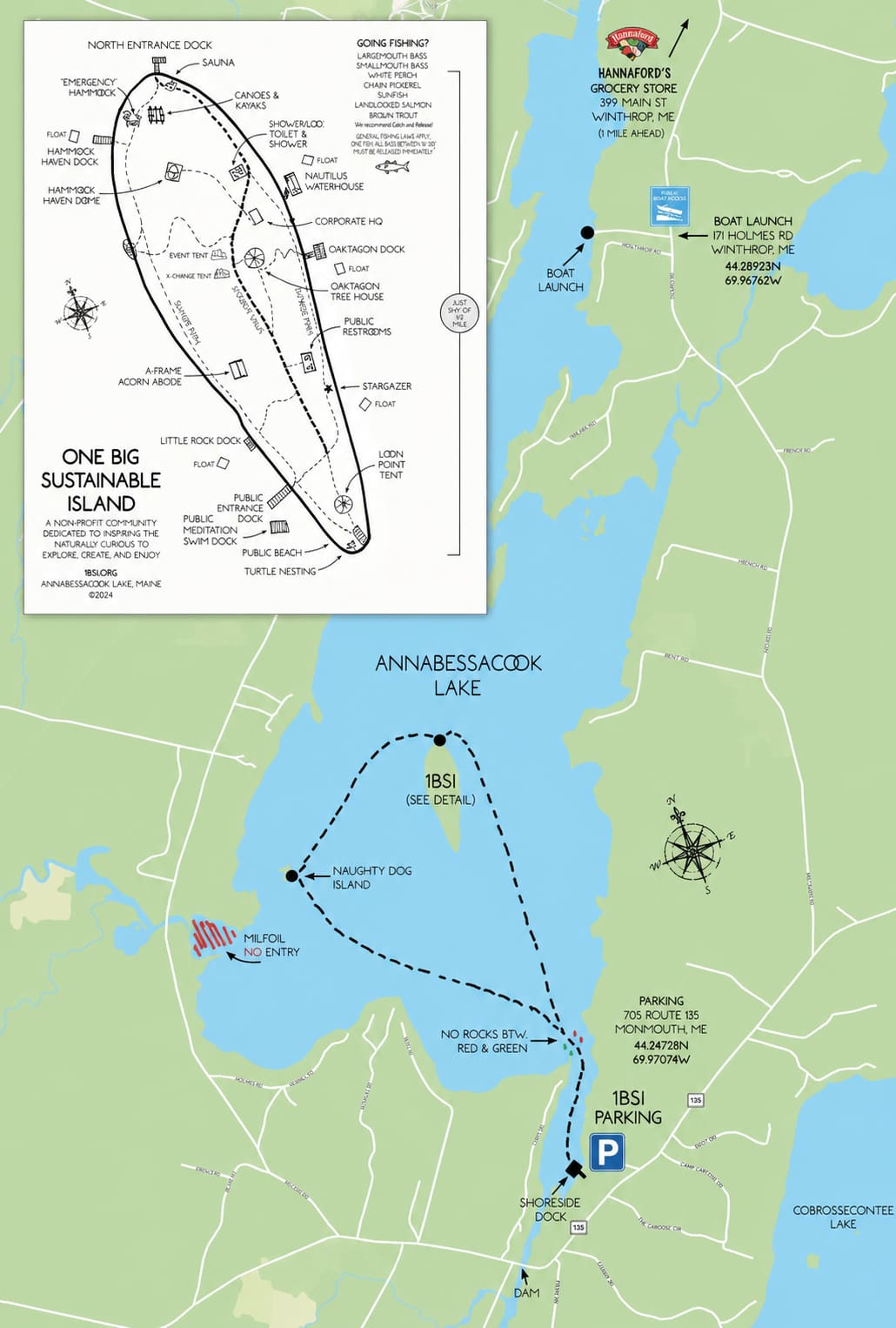 The lake map provides a wider view of Annabessacook Lake, including the island, Paddler's Cove, nearby shoreline features, public access points, and useful paddling landmarks. It is especially helpful for visitors arriving by canoe, kayak, SUP, pedal boat, or private boat.
Conditions on the lake can change with wind and weather. Before heading out, note your route, the location of the island, and the direction back to your starting point. A lake can look delightfully obvious from shore and surprisingly mysterious from the middle.
Wear practical footwear and move carefully, especially after rain. Walking slowly is not merely permitted; it improves your chances of seeing birds, discovering unusual trees, and noticing the tiny dramas occurring in the moss.
Activity Locations
The guide map identifies the locations of swimming areas, hammocks, paddlecraft, restrooms, the sauna, the Xchange Tent, gathering areas, and other visitor amenities. Some activities may be unavailable because of weather, maintenance, water conditions, or overnight guest use.
Please follow posted signs and respect any areas marked private, closed, or reserved. The island is shared among day visitors, overnight guests, staff, volunteers, and several critters who have declined to make reservations.
Estimated Walking Times
Most island destinations can be reached within five to fifteen minutes from the primary arrival dock. A complete loop of the main trail system generally takes between twenty and forty minutes, depending on pace, stops, and how long you become distracted by the lake.
Walking times are approximate because island time is notoriously elastic. Allow extra time for photographs, swimming, conversations, wildlife sightings, and sudden decisions to lie in an "Emergency" Hammock.
These facilities are not traditional outhouses. When used correctly, the composting system is clean, low-odor, and remarkably effective, despite asking sawdust to perform responsibilities rarely mentioned in forestry school.
Lake water should not be consumed without proper treatment. Staying hydrated will make walking, swimming, paddling, sauna use, and prolonged hammock occupation substantially more enjoyable.
For serious injuries or medical emergencies, call 911 immediately and use the digital guide to identify your location. Using the Get Help Now button, notify the 1BSI team as soon as possible so that we can assist emergency responders and arrange transportation.
Think of it as a tiny outpost of civilization tucked into the woods: wander in, grab some water, and head back out to whatever island adventure you temporarily interrupted by getting thirsty.
The Public Beach is a wonderful place to swim, relax, or simply watch the lake go about its day. Shore conditions vary throughout the season as water levels, wind, and weather reshape the shoreline. Please avoid trampling shoreline vegetation or disturbing nesting areas so future visitors can enjoy the same natural setting.
The "hottest" spot for swimming is the entrance dock next to the sauna.
And, for group swimming, try the public beach near the Public Entrance Dock at Loon Point.
Safety first always: No swimming after dark, no lifeguard on duty, no diving off the docks, always swim with a buddy.
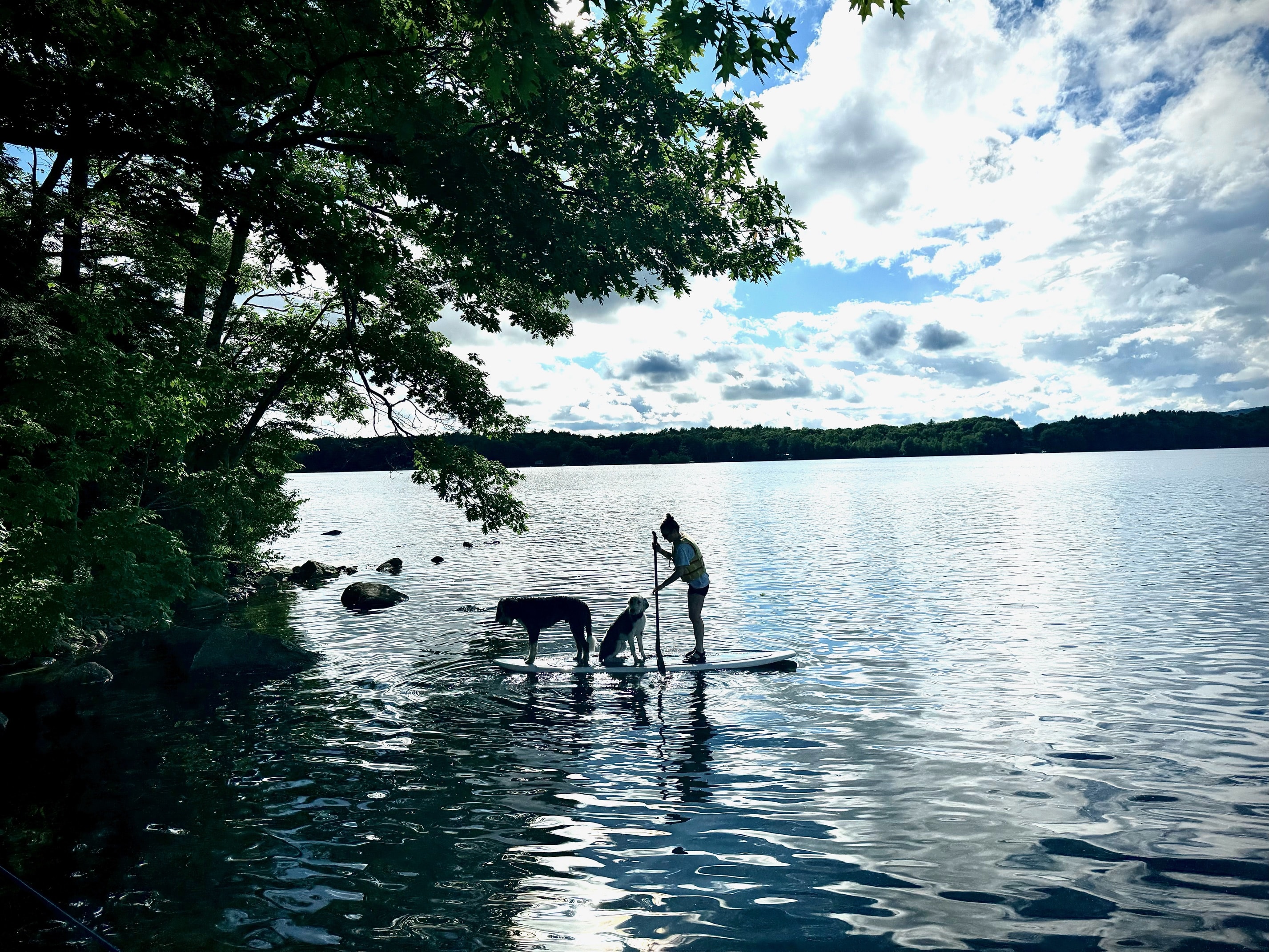 Our collection of canoes, kayaks, and standup paddle boards are near the 1BSI Entrance Dock and the north end of the island. Please help yourself (1st come, 1st served basis). If demand is high and the boat supply starts to run low, please let the Reset Crew know and we’ll bring more from our “secret stash”. Look for paddles and lifejackets in the black trunk.
The Maine State Game Warden Service requires that we tell you to have one lifejacket per person on board any of our boats. If you are a terrible swimmer, if it’s windy and wavy, if the water is liquid, we recommend lifejackets be worn.
Group paddles are safer. If you are going out in a boat alone, please message the Reset Crew when you depart and when you return, so that we know you are safely back home.
This might sound counter intuitive, but bring your cell phone with you. To protect it, use the ziplock bags we've provided in the trunk. So that the phone floats, put an air bubble in the bag before you seal it. The lake is 45 feet deep and if the phone sinks, Siri won't hear you.
Handy phones are important because you might need to reach the Reset Crew (use the GET HELP NOW button) if the wind shifts and a lift back to the island is needed (we do that – though we’re about 5x more likely to be found rescuing the neighbor’s kids than island guests from trouble on the lake).
Leaving your boat tied up to your dock during the day is fine as long a someone is available to keep an eye on things – wind and wave conditions can change quickly and boats don’t like being bounced around or repeatedly rubbing against docks. So, keep a look out for your boat if it’s tied up.
Boats and boaters are required to be out of the water after dark.
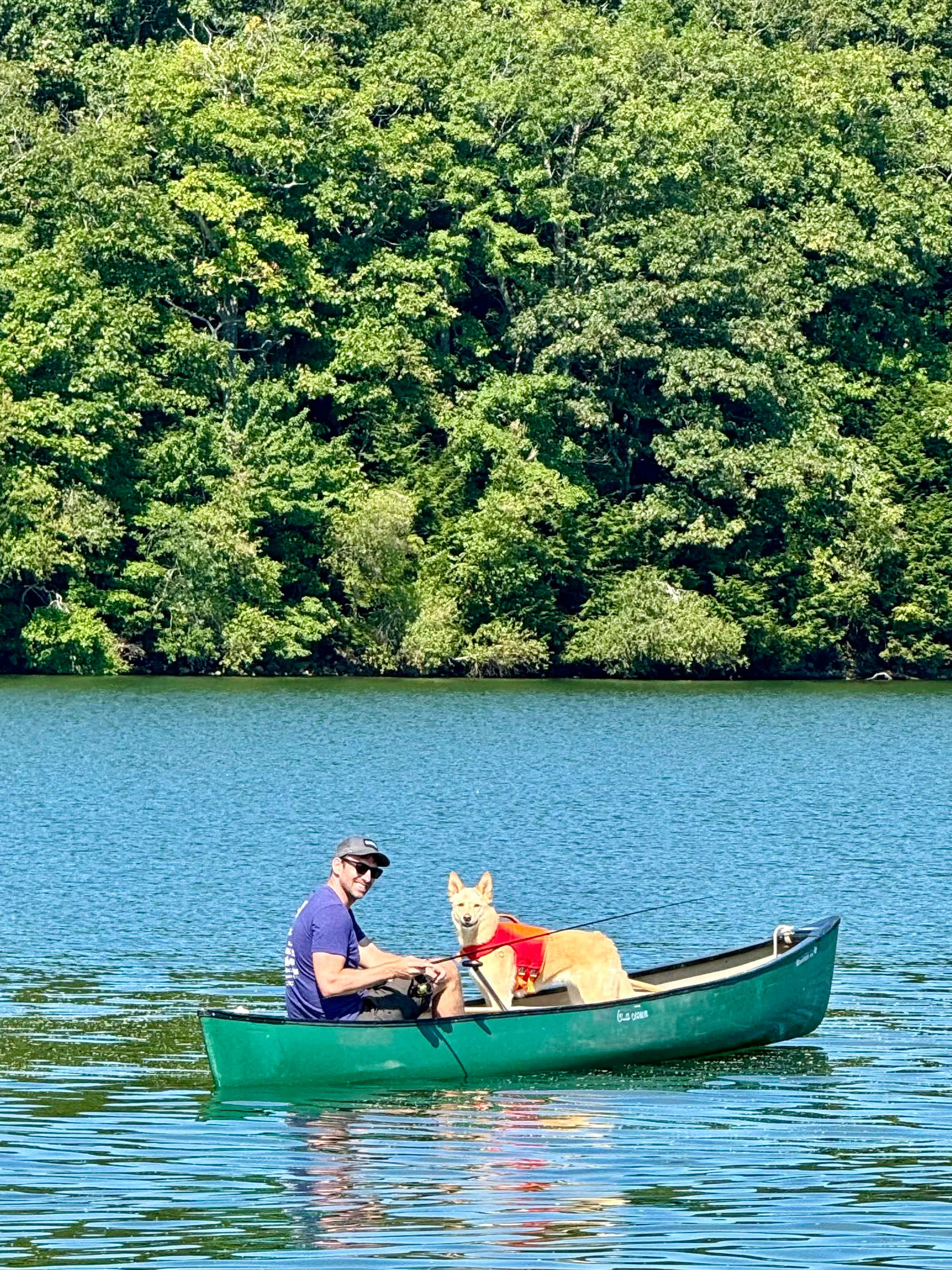 We don’t have much experience fishing. Maybe that’s our secret to success? We watch fishing folk, hang with them, supply them, keep them safe, and we give them so-called advice. But we don’t ACTUALLY spend time fishing because there’s too much other island stuff to do. We do know that there are good, healthy, and wholesome lessons in fishing.
What we HAVE learned about fishing is to start with an understanding of why. Take our fishing survey to figure this out for yourself:
Why do I want to fish? (check all that apply):
[] To catch fish
[] To spend time outside enjoying sunshine, water, waves, and fresh air
[] To spend time AWAY from some people
[] To spend time WITH some people
[] Drama and suspense
[] Bragging rights
Take your answers and look at the world of knowledge online about achieving fishing success however you’ve defined it. That might range from the proper use of a fishing rod, tackle, and bait to answers only a therapist or chaplain might help with.
We have outfitted your stay with some plain vanilla fishing gear and the GET HELP NOW button if you need more of anything. Feel free to reach out.
Follow all posted instructions and use the sauna responsibly. Hydrate, limit your time inside, supervise children closely, and remember that the objective is restoration, not competitive roasting.
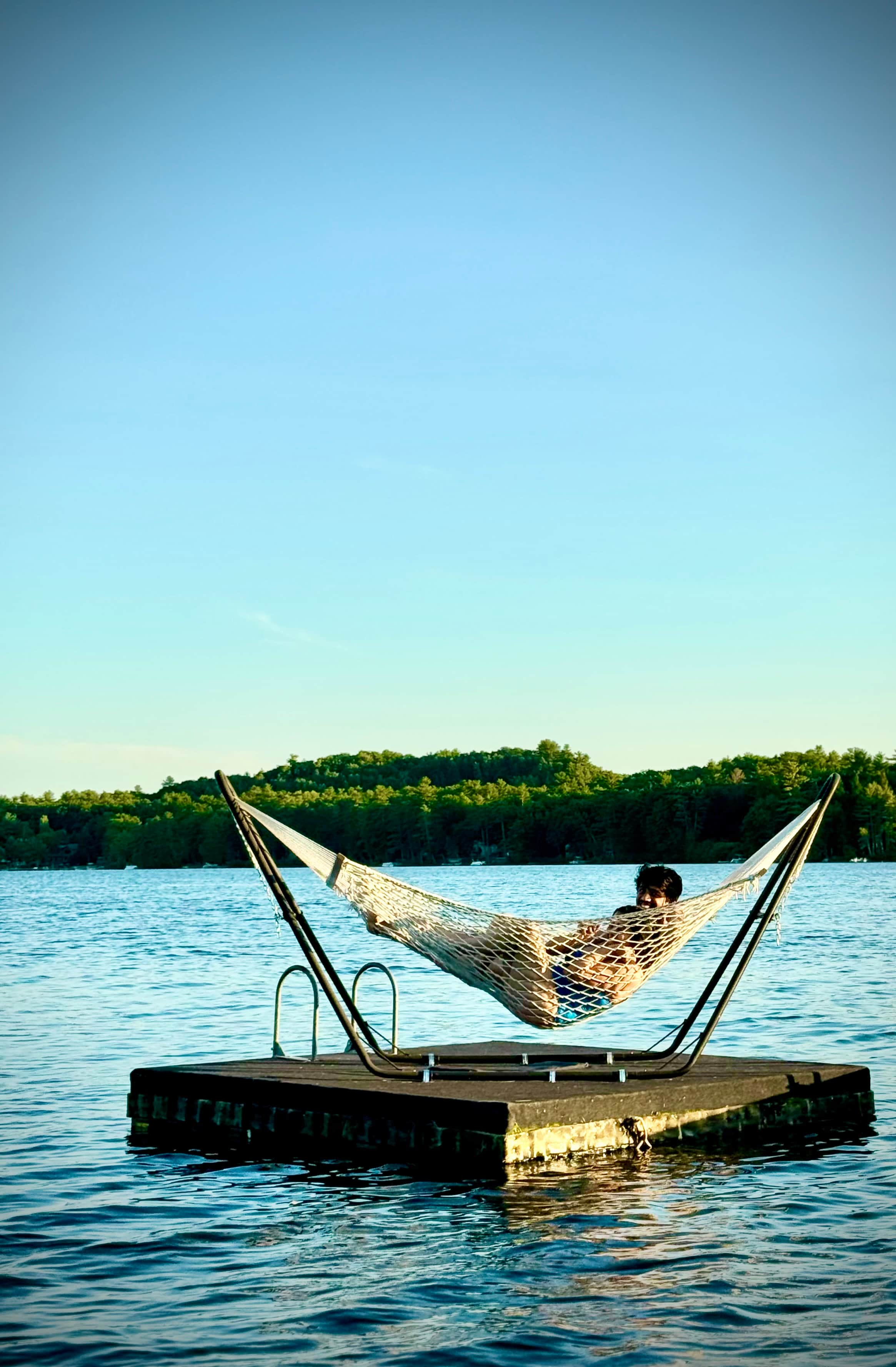 Each of the stays at 1 Big Sustainable Island is equipped with their own private hammock swim dock. We encourage you to use it during the daylight hours. After dark, hammocking is limited to onshore only please.
And remember there is no diving, no life guard on duty, and a ladder available for the rinse and repeat cycles.
Slow down and let the island reveal itself. Wildlife has a remarkable ability to appear once people stop trying so hard to find it. Observe animals from a respectful distance and never feed them. They are far more interesting behaving naturally than negotiating for your lunch.
There are two kinds of loons - ones in a “relationship” and ones that are not. Breeding pairs stake out a territory – usually a remote cove – for nest building and hatching eggs. Once there is an egg or two on the nest, they don’t stray far.
You might also see a group of loons swimming around the lake together. This is called “rafting” in loonspeak. These folks are the spinsters, teenagers, and solo loons that are just passing the time. Life in this group is easy going and lackadaisical.
All the commotion calling after dark is really advertising. The males are the most vocal in proclaiming their ownership of their territory or alerting others to preditors. You’ll hear the other mating males from another cove respond with a similar call. And it isn’t until the females chime in with their “Would you guys please calm down!?” call, that things settle down for a while until some male opens his mouth again. Kid you not. Listen for this pattern after dark.
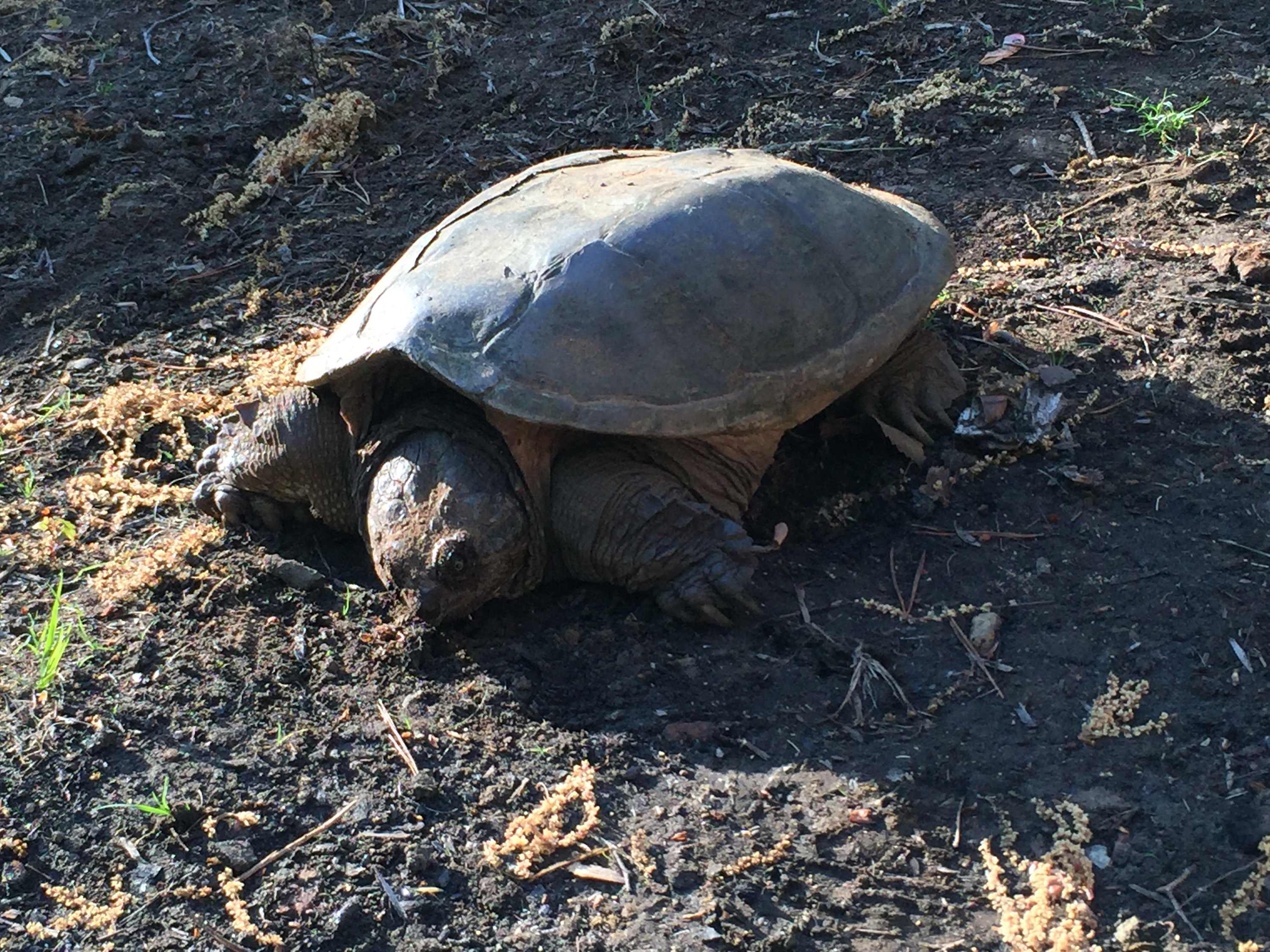 Turtles are smart critters. Three times a year Annabessacook Lake’s Painted and Snapping turtles go to the edge of the introverted shyness and make their presence known: May, June, and September. The rest of the year, they might catch a tan on a remote log, but we don't see them much.
In May, you can find turtles swimming in the shallow waters close to shore. These are female turtles casing out the place in search of a great place to lay eggs – close to shore (easy, safe access), loose soil (easy to dig a hole), that faces south (sunshine to incubate eggs) are choice. Loon Point is one of these places as is Naughty Dog Island near the dock.
Around the first full moon in June, the digging and egg-laying begins. Hole digging typically happens after dark. You’ll notice freshly disturbed soil the next morning for sure.
Momma turtle crawls out of the water and uses her flippers to dig a 9-inch-deep hole. She then straddles the hole and deposits her eggs. Before she crawls back into the lake, she uses her flippers to cover the eggs with soil. From start to finish, the process takes about an hour.
If you're lucky enough to find Momma while she’s laying, be sure to give her some distance and keep your pups away. There’s a reason they’re called Snapping Turtles. In the water, they’re shy and will simply swim away from harm, but on shore (especially when they are laying eggs) they're on a hair trigger!
Late August, we get one last turtle reminder - when the eggs hatch and baby turtles emerge from the ground. These little critters are about the size of a quarter and randomly crawl around the shore looking for the lake. If you find a baby on ground, you’d be doing it a favor by picking it up by the edge of its shell (they won’t inflict harm) and putting it in the lake.
Eagles and osprey have a thing. Many an ariel dogfight has been observed over disputed fish snacks. There must be thousands of fish in the lake, but when one of them catches a good meal, the other is convinced that it was stolen from them!
Female eagles tend to be larger than males. It takes a young eagle about a year and a half to mature, which means that occasionally there is more than one youngster in the nest at a time.
“Teenaged” eagles have the eagle outline, but not yet the eagle colors. Their raggedy, mottled, grey-colored feathers are replaced by the adult white head and tail with a grey coat when they reach the age of two.
Which means eagle teens are awkward and clumsy. They don’t innately know how to catch fish, so we get to see “training sessions” lead by Mom and Dad. We also watch spats between the adult couples over whether the teenagers should be babied and fed, or whether they should go a little hungry and properly motivated to provide for themselves. In nature, this sort of family conflict is common among many species.
Once they figure out exactly how many resident humans and dogs there are, they get right back in the water and leave. If you are lucky enough to see one, please get a picture. It’s a rare event.
One silver lining to a deerless island environment is that we have no ticks.
Leave No Trace
Take all personal belongings, food packaging, and trash with you or place them in provided receptacles. Do not remove plants, rocks, wood, wildlife, or equipment. Leave every part of the island exactly as you found it.
Respect Overnight Guests
Several areas of the island are temporary homes for overnight guests. Please avoid decks, docks, furnishings, and spaces associated with reserved accommodations. If something looks like someone's porch, bedroom, or private dock, it probably is.
Quiet Areas
Some parts of the island are set aside for quiet recreation, wildlife observation, and the privacy of overnight guests. Keep voices, music, and group activities at a considerate volume. Sound travels well across water.
Safety
Make good decisions based on weather, water conditions, your abilities, and posted guidance. Children must be supervised at all times near docks, boats, and the shoreline. Required life jackets must be worn. Closed or restricted areas must be respected. In a medical, fire, or water rescue emergency, call 911 first.
Contact the Reset Crew
We’ll share your location with the crew automatically when you send.
Critical emergency? Call Us Now
These are suggestions, not schedules. Allow extra time for getting to and from the island by paddle or ferry. Islands have a way of improving even the best plans.
The Island Sampler
Stroll the main trail, find a shoreline viewpoint, and spend a few quiet minutes watching the lake. Dip your toes in or relax in a hammock before heading back. You’ll leave with a strong suspicion that an hour wasn’t nearly enough.
The Island Explorer
Walk most of the trail system, visit the Public Beach, relax in a hammock, watch for wildlife, and rent a canoe, kayak, SUP, or pedal boat to see the island from the water. The island rewards curiosity far more generously than speed.
The Reset Adventure
Walk every trail, enjoy a leisurely swim, paddle the shoreline, warm yourself in the wood-fired sauna, cool off with a plunge from the Maine Dock, and enjoy a picnic. Enough time to stop checking the clock and begin operating on island time.
The Family Expedition
Walk the trails together, search for turtles, frogs, birds, and interesting rocks, enjoy a picnic, swim, and paddle. Leave plenty of time for climbing, asking questions, and discoveries that adults have learned to walk right past.
Every so often, someone asks us why we decided to create an island like this. The answer has very little to do with cabins, trails, ferries, or paddleboards.
We built 1 Big Sustainable Island because we believe islands have a remarkable ability to slow people down. When reaching a place requires crossing water, something changes. The distractions are left behind, conversations become a little longer, sunsets become a little more important, and curiosity quietly returns. We wanted to create a place where that experience would be available to everyone.
1BSI isn’t quite a campground, a hotel, a park, or a retreat center. It borrows some of the best ideas from each and combines them into something a little different: a small, well-mannered village surrounded by water that depends on visitors choosing to care for this place and one another.
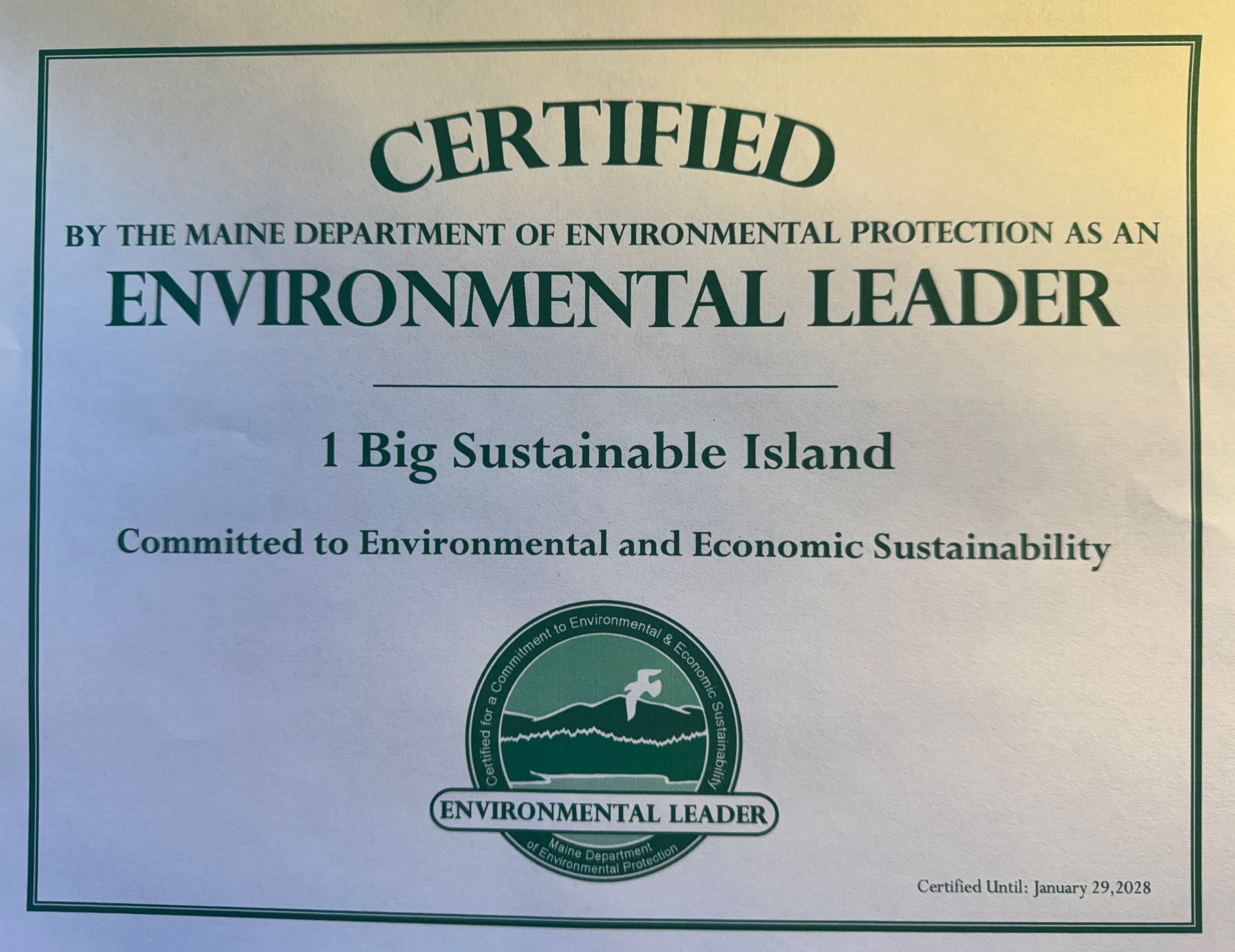
The island is also a living laboratory. Composting toilets, water conservation, habitat restoration, and thoughtful design aren’t hidden behind walls — they’re part of the visitor experience, because we believe good ideas should be shared.
Every visit helps write the next chapter. Our mission remains the same: Resetting Humans, one island at a time.
A day on the island is wonderful. If this visit leaves you wanting a little more island in your life, we’d love to welcome you back.
Stay Overnight
As evening settles in, the island becomes quieter. Loons replace boat traffic, stars replace schedules, and mornings begin with birdsong. Choose from a treehouse, floating waterhouse, glamping dome, tent, or cabin.
Book a StayCelebrate Here
Birthdays, anniversaries, reunions, retreats, weddings, and “just because we needed to get everyone together” all fit naturally on an island where conversations last a little longer.
Get in TouchBecome a Member
1BSI is a nonprofit organization. Your support helps care for the island, improve visitor experiences, expand environmental education, and protect wildlife habitat.
Learn MoreVolunteer
The island has been built by thousands of hours of volunteer effort. Whether you like building trails, planting trees, repairing docks, or solving interesting problems, we’d love to have you join the Reset Crew.
Join the Crew
Ready to plan your overnight island stay?
Bookings go fast in peak season. We'll help you pick the right spot.